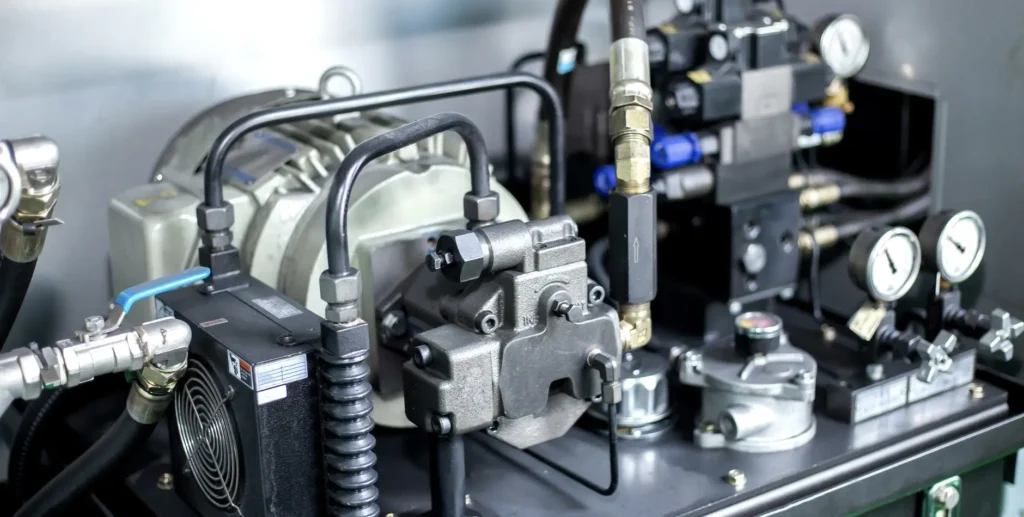
Pressure testing is a critical procedure used to verify the strength, safety, and leak-proof performance of hydraulic components such as cylinders, hoses, valves, and power units. It ensures that the system can operate reliably under working and peak pressure conditions.
In this process, the hydraulic component is connected to a test setup that includes a pump, pressure gauge, and control valves. The system is filled with hydraulic oil (or sometimes water for safety), and air is completely removed to avoid inaccurate readings or sudden pressure fluctuations.
Pressure is then increased gradually using a test pump until it reaches the specified test level, which is usually higher than the normal operating pressure. The pressure is held for a defined period while monitoring the gauge and checking for any pressure drop, leaks, deformation, or abnormal behavior.
During the holding phase, technicians carefully inspect joints, seals, welds, and connections. A stable pressure reading indicates a successful test, while any drop suggests leakage or weakness in the system.
After testing, the pressure is slowly released, and the component is safely disconnected. The results are recorded as pass or fail, ensuring only reliable and safe hydraulic equipment is approved for use.
Overall, pressure testing is essential for quality control, safety assurance, and long-term performance in hydraulic systems, especially in high-load and industrial applications.