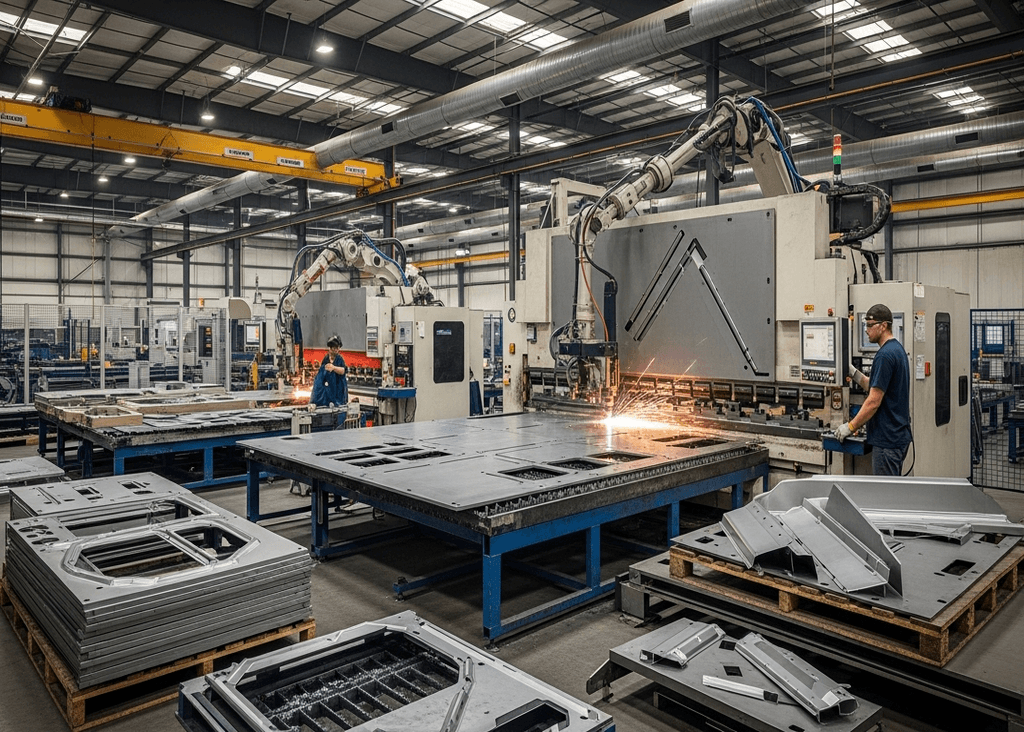
Fabrication equipment in hydraulic systems refers to the machines, tools, and processes used to manufacture, assemble, and repair hydraulic components such as cylinders, power units, pipes, and structural parts. This stage is essential for building durable, high-performance systems used in construction, industrial, and heavy-duty applications.
The fabrication process typically begins with material cutting and shaping, where raw materials like steel plates, pipes, and rods are cut, machined, and prepared using tools such as cutting machines, lathes, and milling machines. Precision is important to ensure all parts fit perfectly during assembly.
Next comes welding and brazing, where components are joined together to form structures like hydraulic cylinders and frames.
Techniques such as arc welding, MIG/TIG welding, and brazing are used depending on the application and material type. Proper joint strength is critical to handle high pressure and load conditions.
Drilling, boring, and honing processes are then used to achieve accurate dimensions and smooth internal surfaces, especially in cylinders where piston movement must be precise and friction-free.
Once the components are fabricated, they move to the assembly stage, where seals, pistons, rods, and fittings are installed. This requires careful alignment and proper torque settings to ensure leak-proof performance.
Finally, all fabricated equipment undergoes quality checks and pressure testing to verify strength, safety, and performance under working conditions.
Overall, hydraulic fabrication equipment and processes play a vital role in ensuring reliability, efficiency, and long service life of hydraulic systems used across various industries.